Introduction
In the rapidly evolving landscape of digital infrastructure, selecting the right web hosting environment is no longer just a technical decision; it is a strategic business move. As businesses migrate from basic shared hosting environments to more robust solutions, the debate often centers on VPS vs Cloud Hosting: Key Differences You Should Know. The global cloud infrastructure market has seen unprecedented growth, driven by the need for high availability and scalability. Simultaneously, Virtual Private Servers (VPS) remain a cornerstone for developers and small-to-medium enterprises (SMEs) seeking dedicated resources without the high overhead of physical hardware. Understanding the underlying architecture, performance metrics, and cost-benefit ratios of these two technologies is essential for any organization aiming to maintain a competitive edge in the digital economy. This article provides a comprehensive deep-dive into the technical nuances, operational advantages, and strategic trade-offs between VPS and cloud hosting environments.
What is VPS Hosting?
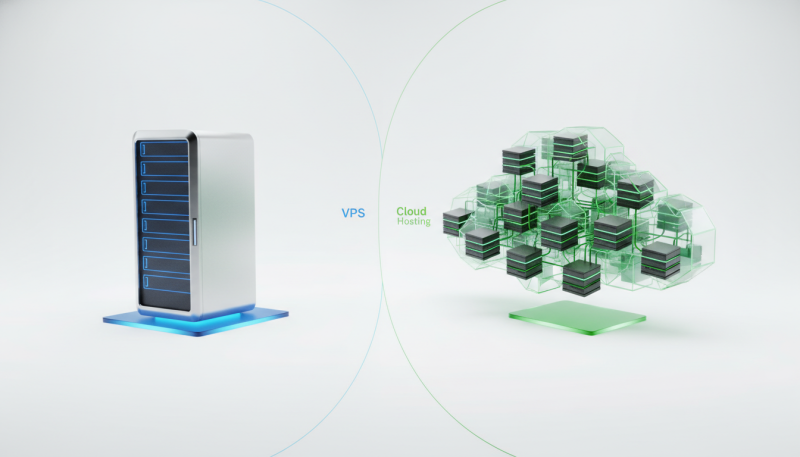
VPS hosting stands for Virtual Private Server hosting. It is a technology that bridges the gap between the affordability of shared hosting and the power of a dedicated server. Through a process called virtualization, a single physical server is partitioned into multiple isolated virtual environments. Each of these partitions acts as a standalone server with its own operating system (OS), dedicated resources (CPU, RAM, and storage), and full root access. This isolation is achieved using a hypervisor, which is a layer of software that manages the distribution of physical resources to the virtual machines.
The Architecture of VPS
In a VPS environment, the hypervisor (such as KVM, Xen, or VMware) creates a virtual layer over the host OS or hardware. This allows the server to run multiple guest instances simultaneously. Unlike shared hosting, where one user’s traffic spike can negatively impact others on the same server, a VPS ensures that your allocated resources are always available to you. However, it is important to note that a VPS is still housed on a single physical machine. If the underlying hardware fails, all virtual servers on that machine will experience downtime unless a backup or failover system is in place.
Pros and Cons of VPS Hosting
The primary advantage of VPS hosting is control. With root access, administrators can install custom software, modify server configurations, and implement bespoke security protocols. It is also highly cost-effective for businesses that require consistent performance but do not have the budget for a dedicated server. On the downside, VPS hosting is limited by the physical capacity of the host machine. If you need to scale beyond the resources of that specific server, you may face a complex migration process. Furthermore, because it relies on a single hardware unit, it lacks the inherent redundancy found in cloud-based architectures.
What is Cloud Hosting?
Cloud hosting is a modern approach to web hosting that utilizes a network of interconnected virtual and physical servers to host applications and websites. Instead of being confined to a single machine, your data and resources are spread across a vast cluster of servers, often located in different data centers. This distributed architecture is designed to provide maximum uptime, flexibility, and scalability. When you use cloud hosting, you are effectively tapping into a pool of resources that can be adjusted in real-time based on your current demand.
The Architecture of Cloud Hosting
The core of cloud hosting is a technology known as clustering. By grouping hundreds or even thousands of servers together, cloud providers create a massive resource pool. When a request is made to your website, the cloud infrastructure dynamically assigns the necessary resources from the available pool. This means that if one server in the cluster fails, another one immediately takes over, ensuring that your website remains online. This level of redundancy is one of the defining characteristics that sets cloud hosting apart from traditional VPS solutions.
Pros and Cons of Cloud Hosting
The most significant benefit of cloud hosting is scalability. It allows for horizontal scaling, where you can add more instances to handle traffic, or vertical scaling, where you increase the power of your existing instances. This is often paired with a pay-as-you-go pricing model, where you only pay for the resources you consume. This makes it ideal for businesses with fluctuating traffic patterns. However, the complexity of cloud environments can lead to higher costs if not managed correctly. Additionally, while cloud hosting offers high availability, the distributed nature of the data can sometimes present challenges for organizations with strict data residency or compliance requirements.
VPS vs Cloud Hosting: Key Differences You Should Know
When comparing VPS and cloud hosting, several key factors come into play. While both use virtualization, the way they manage resources, handle failures, and scale varies significantly. Understanding these differences is crucial for determining which environment aligns with your technical requirements and business goals.
1. Resource Allocation and Performance
In a VPS environment, resources like RAM and CPU are strictly partitioned. While this ensures that you always have access to what you paid for, it also means you cannot easily exceed those limits during a sudden traffic surge. Cloud hosting, on the other hand, offers a more elastic approach. Resources are pulled from a cluster, allowing for “bursting” capabilities. If your site suddenly receives ten times its normal traffic, the cloud can scale up instantly to accommodate the load, whereas a VPS might struggle or crash if the physical server reaches its limit.
2. Reliability and Redundancy
Reliability is perhaps the biggest differentiator. A VPS is a single point of failure (SPOF) if the physical host fails. While modern providers use high-quality hardware and RAID configurations to mitigate this, the risk remains. Cloud hosting is built on the principle of redundancy. Because your site is hosted on a virtual partition that draws resources from multiple physical servers, the failure of a single hardware component has zero impact on your site’s availability. This makes cloud hosting the preferred choice for mission-critical applications where downtime results in significant revenue loss.
3. Scalability and Flexibility
Scaling a VPS usually involves a “reboot” or a migration to a higher-tier plan on the same or a different server. This can lead to brief periods of downtime. Cloud hosting offers near-instant scaling. Many cloud platforms provide auto-scaling features that automatically add or remove resources based on real-time metrics like CPU usage or traffic volume. This flexibility is essential for startups and e-commerce sites that experience seasonal spikes, such as during Black Friday or holiday sales.
4. Customization and Control
VPS hosting typically offers more granular control over the server environment. Since you have a dedicated slice of a server, you can configure the OS kernel and deep-level settings more freely. Cloud hosting also offers significant control, but because the environment is distributed and managed by a complex orchestration layer, some low-level hardware configurations might be abstracted away from the user. For developers who need a very specific, static environment, a VPS is often the simpler and more predictable choice.
5. Cost Structure
VPS hosting usually follows a fixed monthly or annual billing cycle. This makes budgeting easy and predictable. Cloud hosting often uses a utility-style billing model. While this can save money for sites with low or variable traffic, it can lead to “bill shock” if a site is targeted by a DDoS attack or experiences an unexpected surge in resource consumption without proper cost caps in place. It is important to evaluate your traffic patterns before committing to a cloud billing model.
Security Considerations in VPS and Cloud
Security is a top priority for any online venture. In a VPS, security is largely the responsibility of the user. You must manage your own firewall, updates, and patches. Because you are isolated from other users on the same server, their security breaches are unlikely to affect you, provided the hypervisor remains secure. Cloud hosting adds another layer of security through its distributed nature. Many cloud providers offer integrated security services like Web Application Firewalls (WAF), DDoS protection, and automated backups as part of their infrastructure. However, the increased number of entry points in a distributed network requires a more comprehensive security strategy, often referred to as the “shared responsibility model.”
When to Choose VPS Hosting
VPS hosting is an excellent choice for businesses that have outgrown shared hosting but do not yet require the massive scale of the cloud. It is ideal for:
- Small to Medium Businesses: Who need reliable performance for a corporate website or a small e-commerce store.
- Developers: Who need a staging environment or a sandbox to test applications with full root access.
- Specific Resource Needs: Applications that require a consistent amount of RAM and CPU without the need for frequent scaling.
- Budget-Conscious Projects: Where a fixed monthly cost is preferred for financial planning.
When to Choose Cloud Hosting
Cloud hosting is the superior option for dynamic, high-growth, or high-traffic websites. You should consider it for:
- E-commerce Platforms: Where traffic can spike unpredictably due to promotions or seasonal trends.
- SaaS Applications: That require high availability and the ability to scale globally.
- Large Enterprises: That need robust redundancy and disaster recovery capabilities.
- Data-Intensive Projects: Applications that process large amounts of data and require flexible storage and compute power.
Optimizing Your Hosting Strategy with Sky Hostic
Choosing between VPS and Cloud is not just about the technology; it is about the partner you choose to manage that technology. For those seeking a balance of high performance, expert support, and cutting-edge infrastructure, Sky Hostic offers tailored solutions that bridge the gap between traditional hosting and modern cloud demands. By leveraging optimized server configurations and a global network, they ensure that your digital assets remain fast, secure, and always accessible, regardless of the underlying architecture you choose.
Frequently Asked Questions
Is VPS hosting faster than cloud hosting?
Not necessarily. While a VPS provides dedicated resources on a single machine, cloud hosting can offer better performance during traffic spikes due to its ability to draw from a larger resource pool. The speed depends more on the provider’s hardware quality and network optimization than the hosting type itself.
Can I upgrade from VPS to Cloud hosting?
Yes, most modern providers allow for migration between environments. However, because the architectures differ, this usually involves moving data and reconfiguring certain settings. It is best to plan for this migration during low-traffic periods.
Which is more secure: VPS or Cloud?
Both are highly secure if managed correctly. VPS offers isolation on a single server, while Cloud offers distributed security and built-in redundancy. The “most secure” option is the one that is regularly patched, monitored, and configured with strong firewalls.
Is cloud hosting more expensive than VPS?
Initially, cloud hosting might seem more expensive due to its advanced features. However, because of the pay-as-you-go model, it can be more cost-effective for sites with variable traffic. VPS is generally cheaper for sites with steady, predictable resource needs.
What is the main difference between VPS and Cloud?
The main difference is the underlying infrastructure. A VPS is a slice of one physical server, while cloud hosting is a virtualized environment spread across multiple physical servers in a cluster.
Conclusion
The decision between VPS and cloud hosting ultimately depends on your specific needs for scalability, reliability, and budget. VPS hosting remains a powerful and predictable solution for those who need dedicated resources and full control at a fixed price. Cloud hosting, conversely, represents the future of web infrastructure, offering unparalleled scalability and redundancy for dynamic, high-growth applications. By understanding the VPS vs Cloud Hosting: Key Differences You Should Know, you can make an informed choice that supports your long-term digital strategy. Whether you opt for the focused power of a VPS or the elastic resilience of the cloud, ensuring your provider offers top-tier hardware and support is the final step in securing your online success. Trust signals like high uptime guarantees, 24/7 technical support, and transparent resource management are the hallmarks of a quality hosting experience.